Are fluoropolymers really of low concern for human and environmental health and separate from other PFAS?
Claims that fluoropolymers should be considered as polymers of low concern and therefore in need of only minimal regulatory controls are flawed, as this study documents. Within the class of PFAS, fluoropolymers (a group of fluorocarbon-based plastics) are produced in the highest volumes and production volumes, and revenues continue to grow. Fluoropolymers are therefore of high commercial value to the fluorochemical industry and downstream product manufacturers. Well known consumer uses include non-stick cookware and waterproof outdoor equipment.
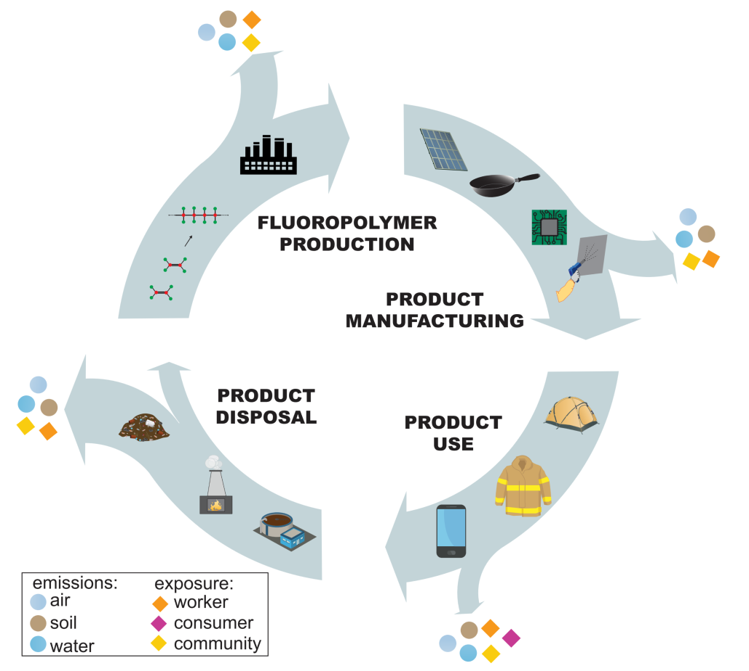
The study evaluates the impacts on human health and the environment from all steps of the life cycle of fluoropolymers, including production and disposal. It looks at the toxicity of fluoropolymer processing aids and by-product emissions to leaching of low-molecular weight PFAS during fluoropolymer processing, use and disposal. The article also draws attention to evidence that polymers, including fluoropolymers, can release toxic substances as well as low molecular-weight fragments able to penetrate cellular boundaries. The article concludes that, given the extreme persistence of PFAS, the emissions of PFAS associated with fluoropolymer production, use, and disposal, and the high likelihood that this will lead to further human exposure to PFAS, the production and uses of fluoropolymers should be curtailed and their use restricted to only those uses considered essential for health, safety and the functioning of society.
Emissions from fluoropolymer production plants
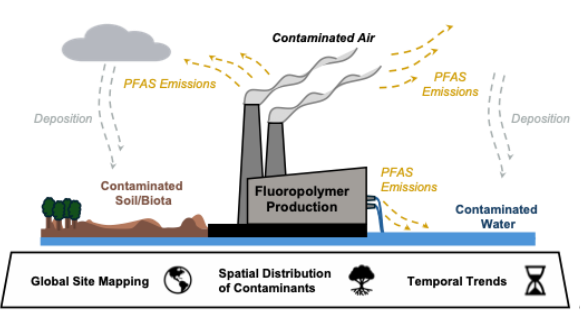
Fluoropolymer production plants (FPPs) are known sources of PFAS contamination. An emissions inventory of PFASs and other fluorinated organic substances for the fluoropolymer production industry in Europe was recently published in this peer-reviewed article. The results highlight the large scale of emissions from this industry, even within Europe.
In another recent study, we compiled a global inventory of FPPs along with existing measurements of PFAS in environmental media surrounding them. The results here highlight the true global scale of impacts from the fluoropolymer industry.